The People Are The News

The People Are The News

An anthology series created by John Pick
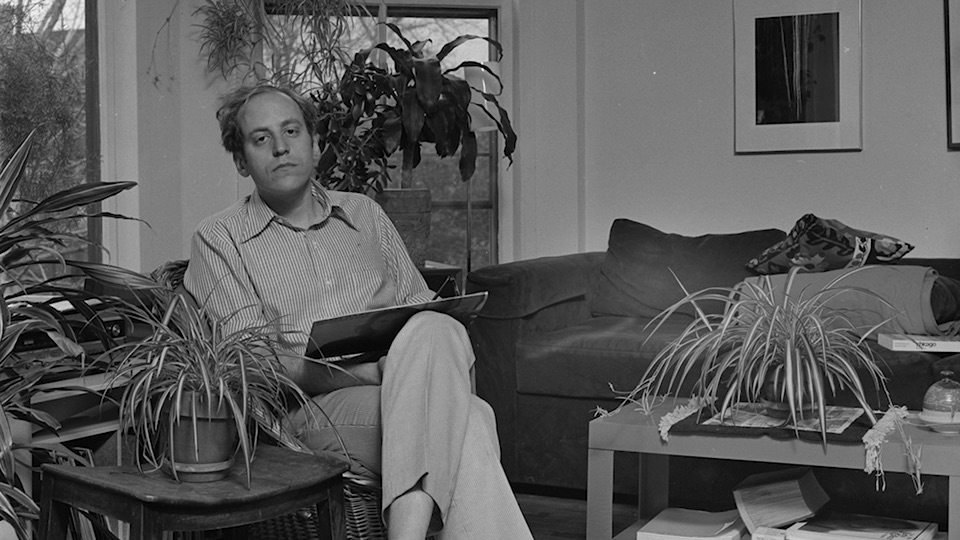
Grant Pick, reporter, seated at home with a notebook, black-and-white photograph
Grant Pick, reporter. Chicago.

Series Overview

A half-hour anthology docu-style series, a hybrid of journalism and performance, featuring portraits of compelling characters standing against the backdrop of timeless issues.

Based on the published work of the late Chicago journalist Grant Pick, who wove gritty, compassionate narratives of an emerging multicultural Americana from 1980 to 2005. He reported in the tradition of Studs Terkel and Truman Capote, with perhaps the whimsy of a great 1970s filmmaker.

Format½ Hour Anthology
SettingChicago, 1945–Now
SourceNorthwestern U. Press
Season One7 Profiles
▶ Watch the Trailer

From the Creator

My father was a great journalist.A pioneer in a style.

Last August, I went searching for some of my dad's lost articles in the research department of the Chicago Public Library. I was knee-deep in the microfiche when the librarian who was helping me came over to the table. She said, "You won't believe this. A reporter just called from the Arizona Republic looking for an article your dad wrote 30 years ago."

I knew it was the spirit of my father. But it was one helluva wink.

She was profiling Abe Hamadeh, a Chicago native running for Arizona Attorney General. In 1996, my father had written a Chicago Reader story about Hamadeh's father, a complicated tale of American tribal turf war. Her article came out some weeks later, and Hamadeh lost the election by 280 votes out of 2.5 million cast.

Maybe a thousand people read my dad's story. It made me appreciate how local journalism shapes the local workings of democracy.

He wrote for the Tribune, the Sun-Times, the Reader, Catalyst, Crain's, the Defender and People: thousands of articles, a treasure chest of stories. He died of a heart attack in 2005, at 57. Three years later I got him one of his life wishes, a book of his stories and his place on the shelf of the Chicago Public Library.

I always felt there was a TV show in his work. Maybe his stories just needed to age a bit, like the complicated fine wine that is America. This project combines my tools with his, and holds them up to an audience to combat the empathy deficit.

— John Pick
Now Showing

The Trailer

Running time 2:16

The Source Material

Grant Pick

Staff writer at the Chicago Reader, contributor to the Tribune, the Sun-Times and People, and a two-time winner of the Peter Lisagor Award for outstanding Chicago journalism.

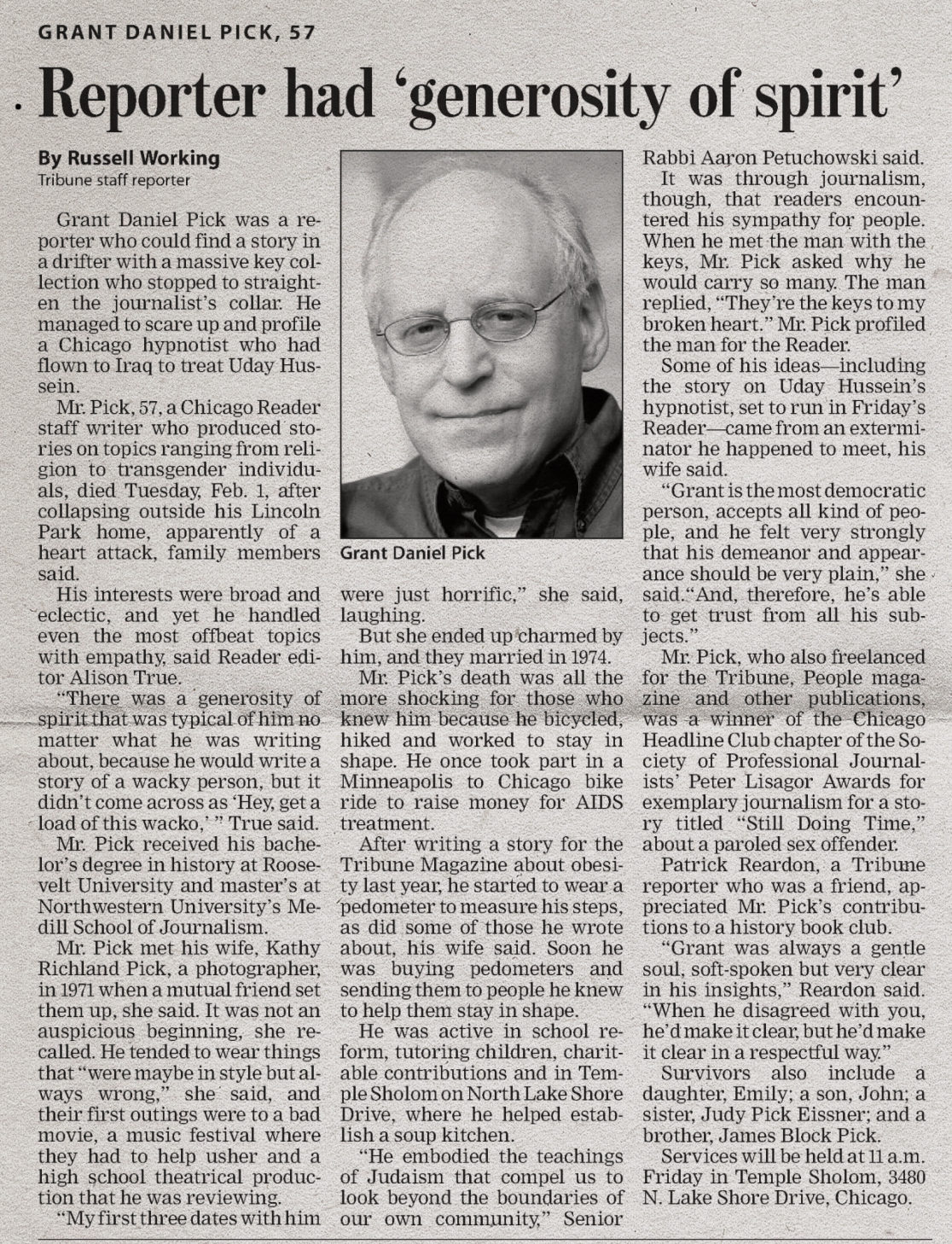
Newspaper obituary: Reporter had 'generosity of spirit'

"There was a generosity of spirit that was typical of him no matter what he was writing about. He would write a story of a wacky person, but it didn't come across as 'Hey, get a load of this wacko.'"— Alison True, his editor

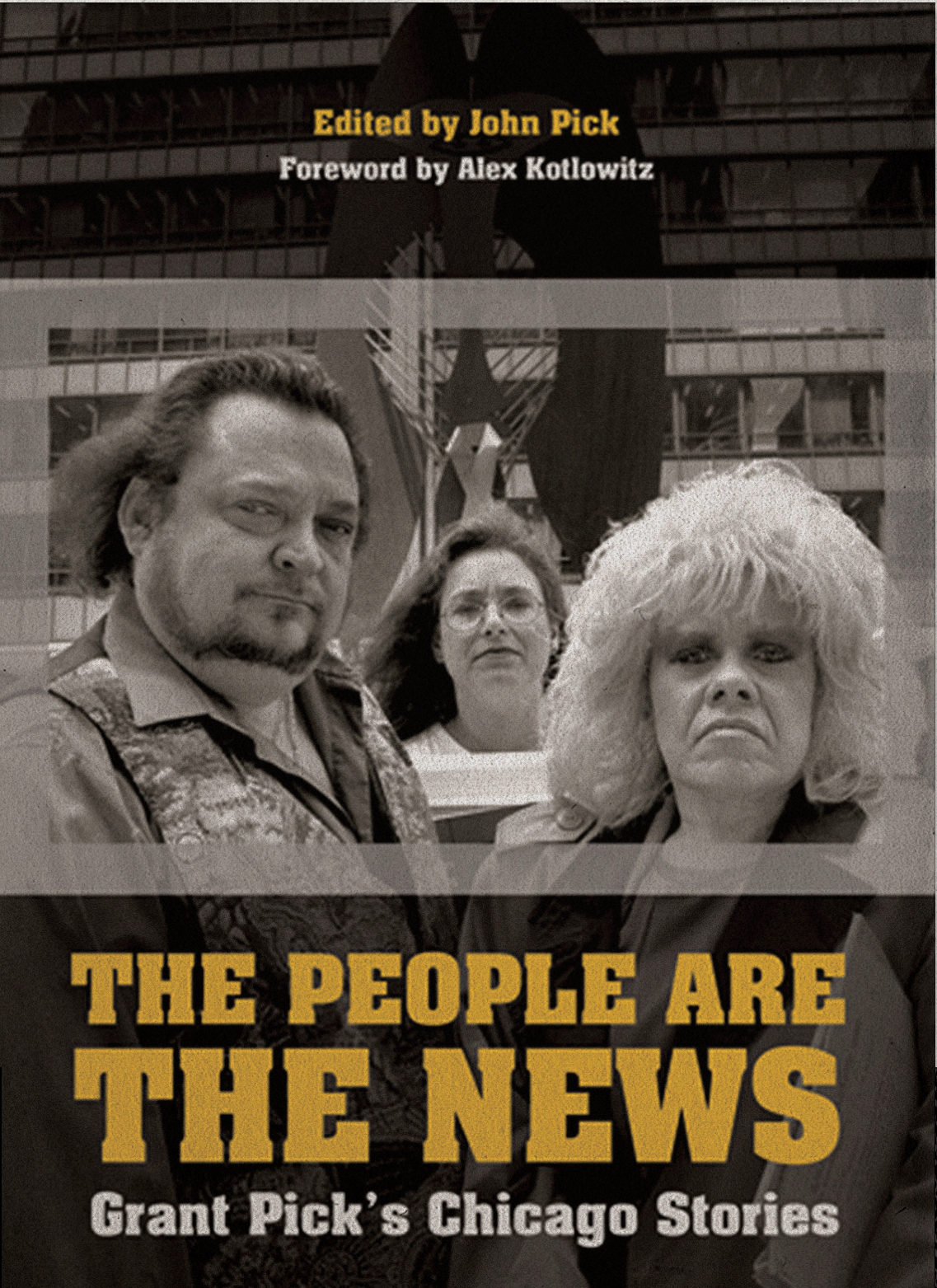
Over 30 years he carved out a niche for slice-of-life stories, finding his subjects in the places most people look away from. After his death, his son John edited seventeen of those stories into The People Are the News: Grant Pick's Chicago Stories, published by Northwestern University Press with a foreword by Alex Kotlowitz.

"Grant rejoiced in the resiliency of the human spirit, and he got us to celebrate along with him." — Alex Kotlowitz

Book cover: The People Are the News, Grant Pick's Chicago Stories, edited by John Pick, foreword by Alex Kotlowitz
"Pick developed a reputation for finding great stories in places most other people would look away from, and for telling those stories with humanity and humor."NPR
"A great crash course in Chicago's subcultures and recent history, and its residents' heritage of tenacity."Time Out Chicago
"[Pick's] reporting was fed by innate curiosity and a no-holds-barred writing style."Chicago Sun-Times
"Grant Pick had this wonderful laugh… His writing has the same effect."Alex Kotlowitz

Profiles / Episodes Written

Season One

Each episode inhabits one of Grant's articles, then crosses into the present, as John goes looking for what happened next.

Episode 1
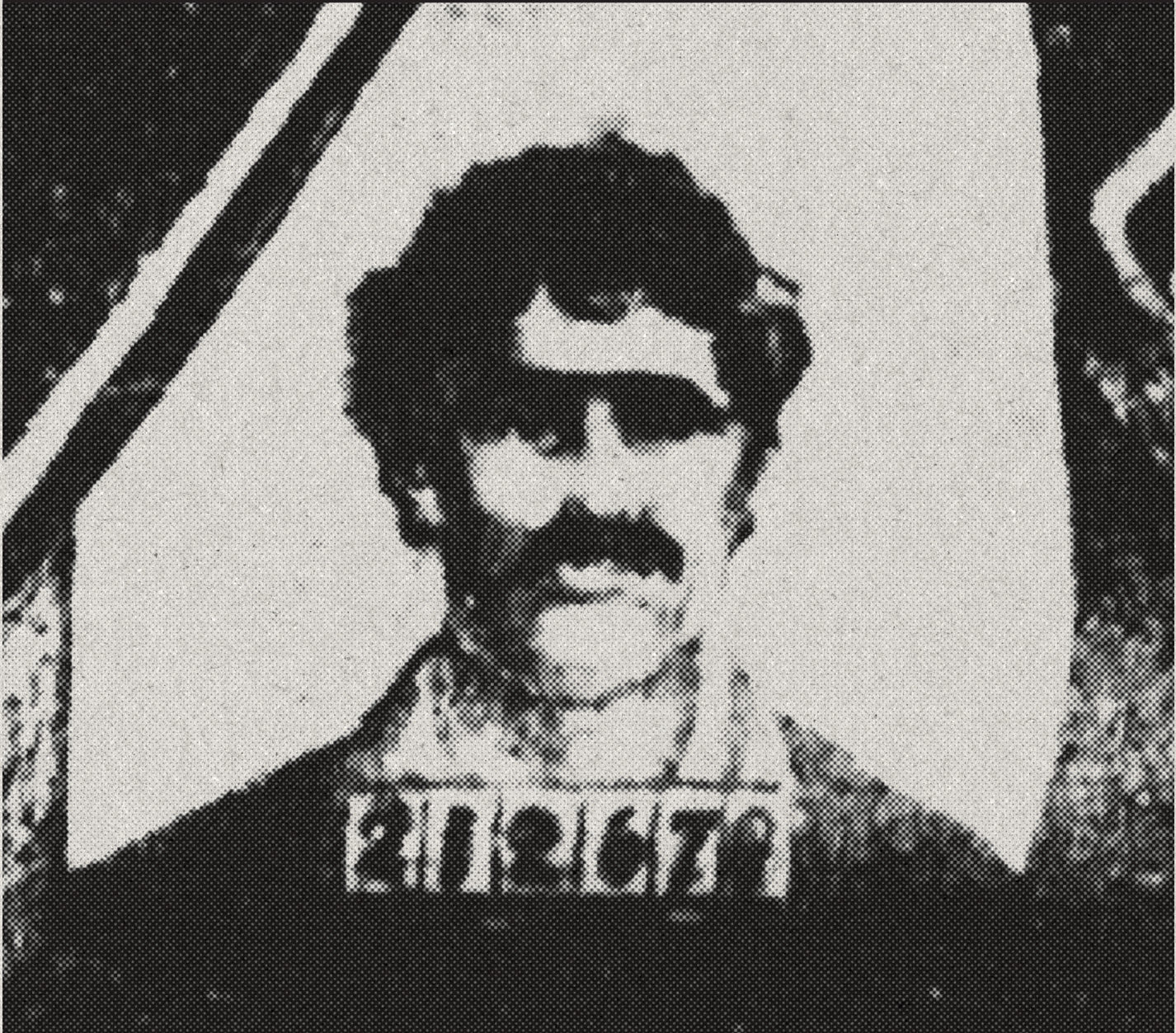
Sketch of Sterling Layman with a prisoner number

A Good Man Is Hard to Find

By Grant Pick · May 21, 1982

Sterling Layman, an orphan and grifter fresh out of jail for counterfeiting, talks his way into a job at the largest passport photo agency in America, then fleeces the boss who treated him like a son.

Read more

He opens a rival shop, World Photo, directly across the street. Lawsuits, a heartbroken letter and a bank robbery follow. The moment Layman walked through the door, "just before noon on a Friday in late April of 1980," was the moment John was born. An examination of an American identity in crisis, and a metaphor for the country as a whole. In the coda, John goes to find Sterling Layman, now 82 and living in Illinois.

Episode 2
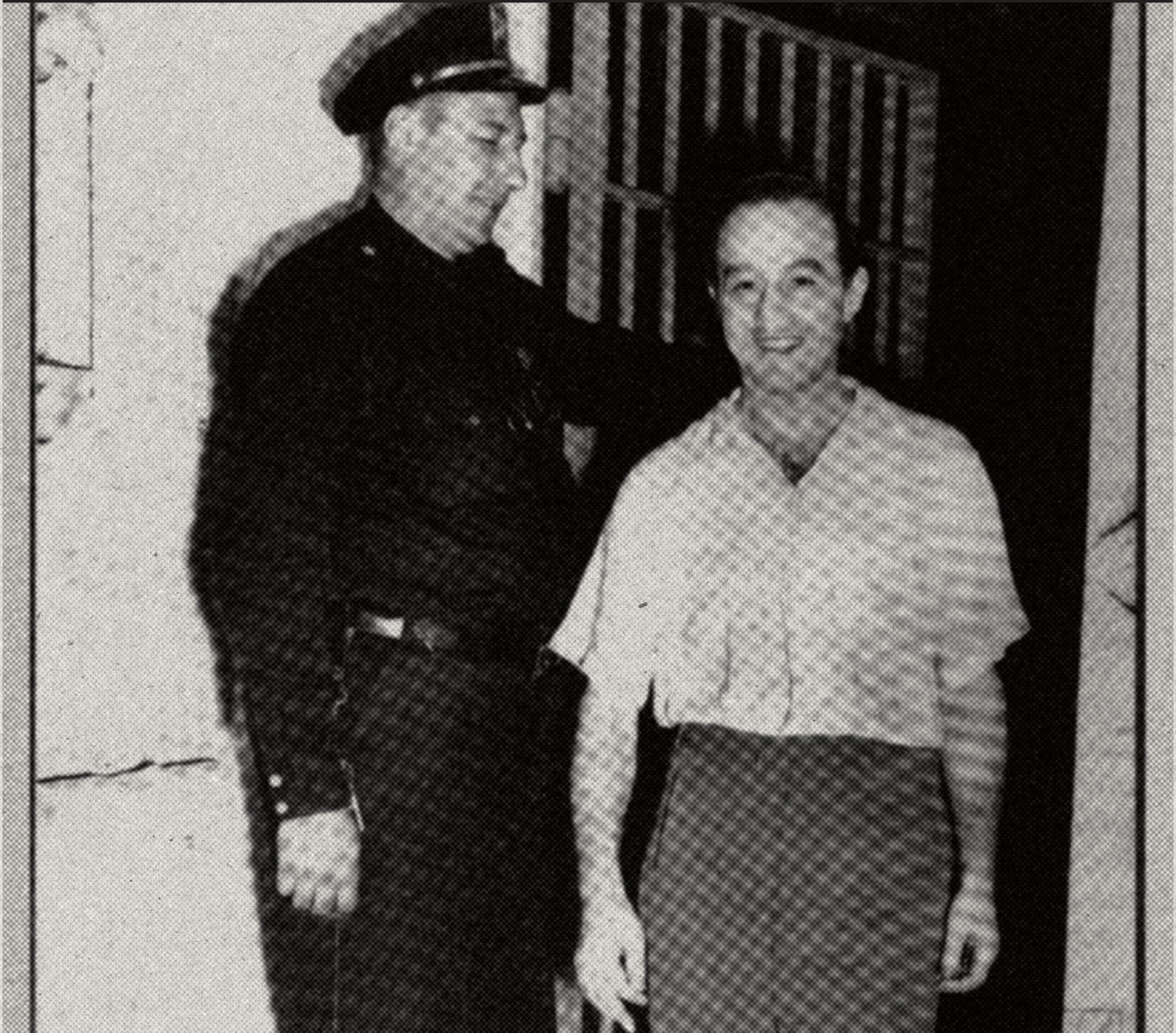
Julius 'Dolly' Weisberg with a police officer

Dolly Weisberg

Illinois Journal of History · April 2000

Perhaps the most famous Jewish gangster in Chicago. He had a Rottweiler named Danger and a hopping nightclub, the Colony Club. Then he murdered a car salesman in a crowded bar.

Read more

Three sailors home from the Pacific witnessed it and fled by train, until the police tracked them across the country. At trial, one rose from the stand and pointed. "I'm no ordinary criminal!" Sentenced to the electric chair, Dolly escaped it with smuggled strychnine and still ended up dead, leaving behind checks on a nonexistent account, memo: to be cashed when I get out.

Episode 3
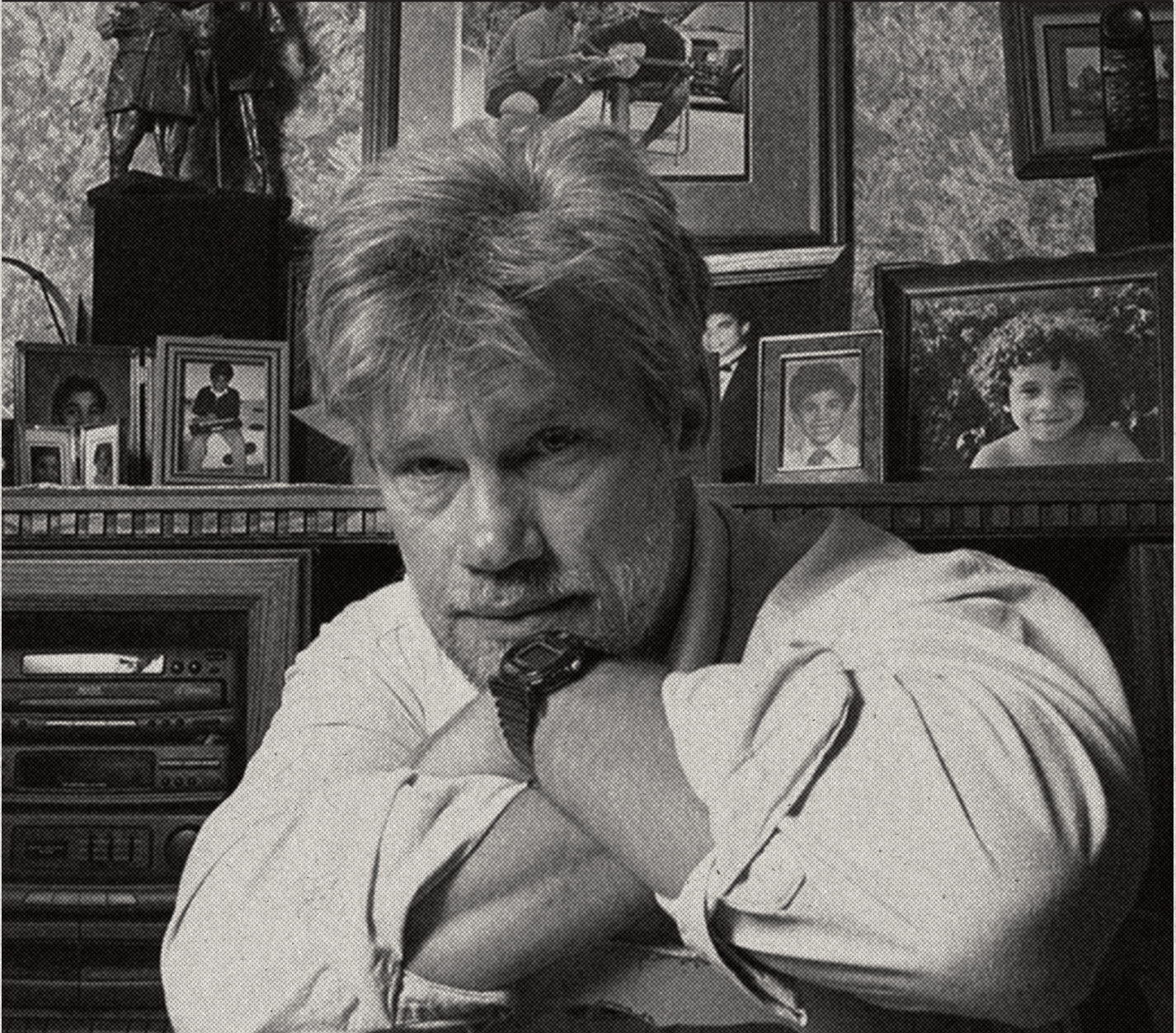
Mike Hedges at home surrounded by family photographs

Life After Death

By Grant Pick · 1995

Mike Hedges counsels teenagers accused of serious crimes at the Audy Home. One night his son Brendan, a gifted young jazz guitarist who liked to say "I am the human race," is shot on the el by Ricky Phillips.

Read more

Grant traces Ricky's troubled path from kindergarten to inevitable criminality, and follows a grieving father back to work with kids who have been dealt a bad hand, among them Adam Gray, convicted of arson at 14. Decades later, Adam was exonerated. In the coda, John visits Adam and Mike Hedges to see how they are doing now.

Episode 4
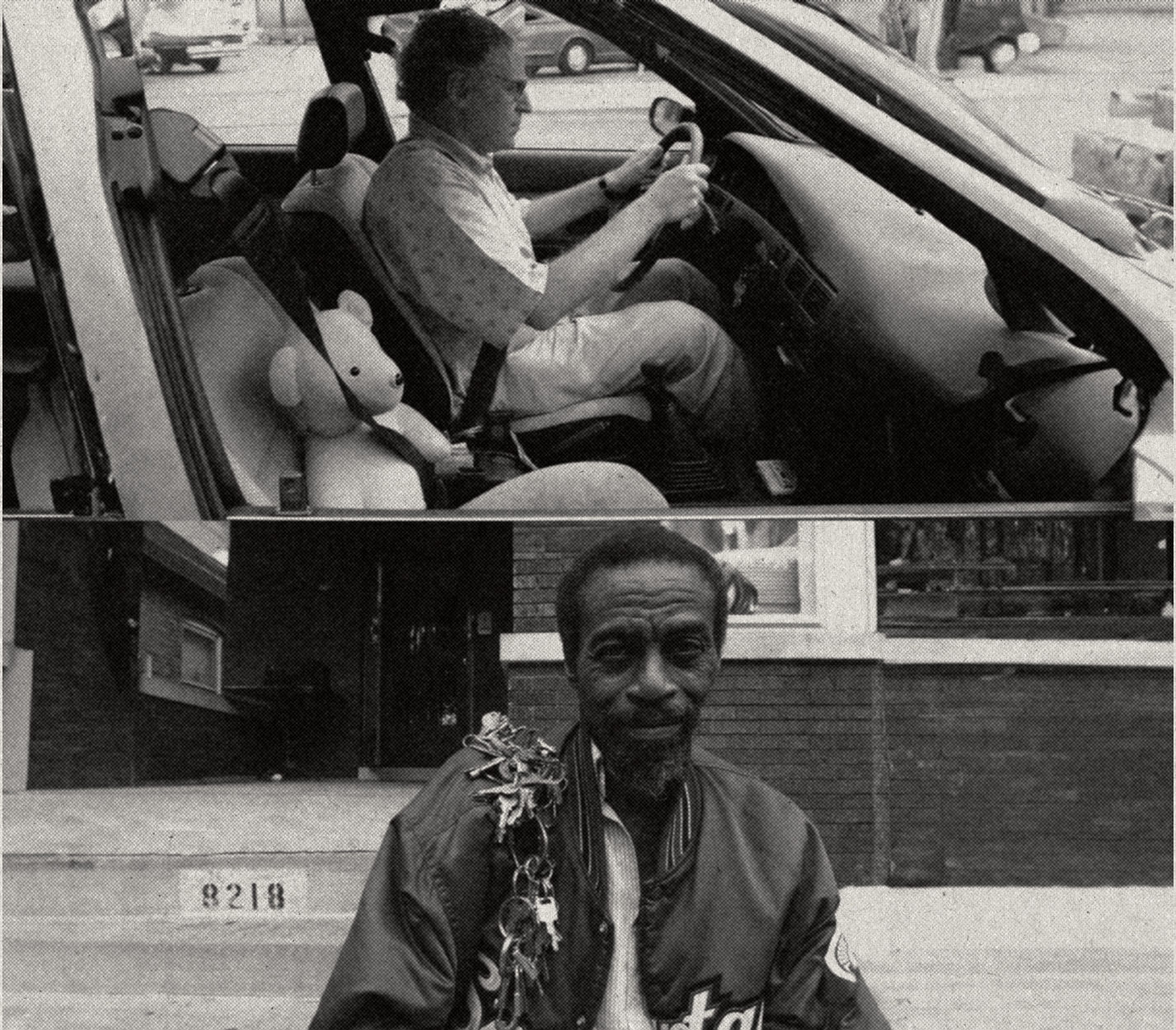
A man driving a car, and a man on a Chicago sidewalk

Spooks

A personal episode

Grant's nickname for his son was "Spooks," and every summer they took a "Spookcation." Four years after his death, Grant's ghost took John on one more: a haunting, healing journey to Ashland, Oregon.

Read more

It ties to the last story Grant ever wrote, about a man called "Keys" who wandered Ashland Avenue on Chicago's South Side wearing a blanket of keys. "They're the keys to my broken heart." The episode asks what his father's spirit was really saying, about healing one heart, and fixing America's.

Episode 5
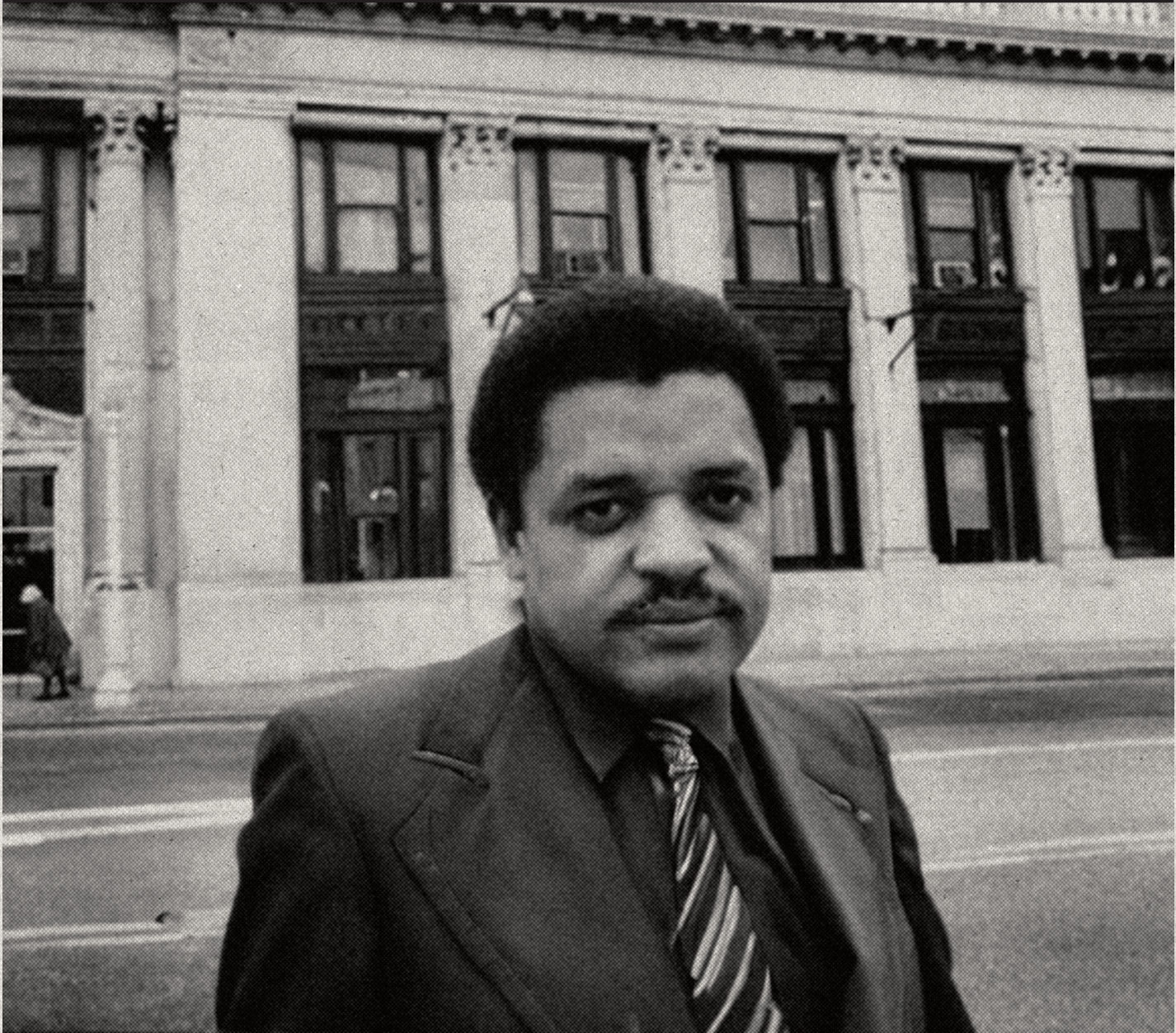
Tom Lewis in front of a bank building

The Breaking of a Bank

Early 1980s

Born in a housing project, Tom Lewis tripled the capital of a Black-owned bank, then opened his own: South Side Bank. It failed. Quickly.

Read more

In two years its capital fell from $27 million to $31,000. The state seized it and sold it to a white-owned bank from Philadelphia. "A man is supposed to do something to save lives or people. I tried to do both." John explores how local, minority-owned banks are faring today, and where Tom Lewis is now.

Episode 6
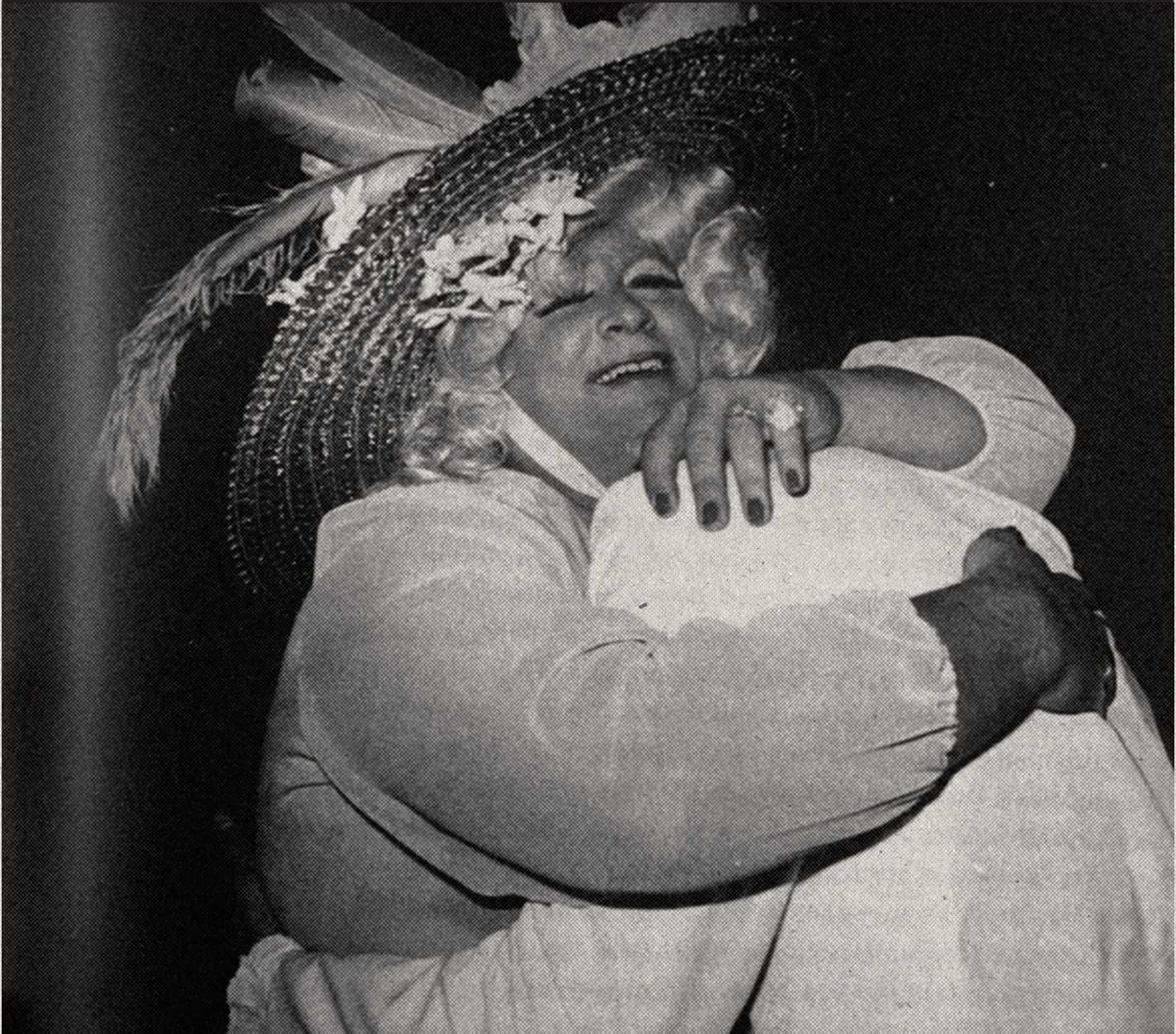
Mother Carol in a flowered hat, embracing a friend

The Queen Is Dead

Chicago, 1980

A portrait of 1970s Chicago legend Mother Carol, a gay rights pioneer and an obese, electric party boy. Think Chris Farley, but gay.

Read more

He drinks, he sings, he dances, he protests, and he builds a family around his bar, a real joint with ties to the mob. As the Chicago police, the city council and the gay community duke it out, Mother Carol spirals into his own demons. Loved and valued, even in his darkest moments: "like the clown crying inside."

Episode 7
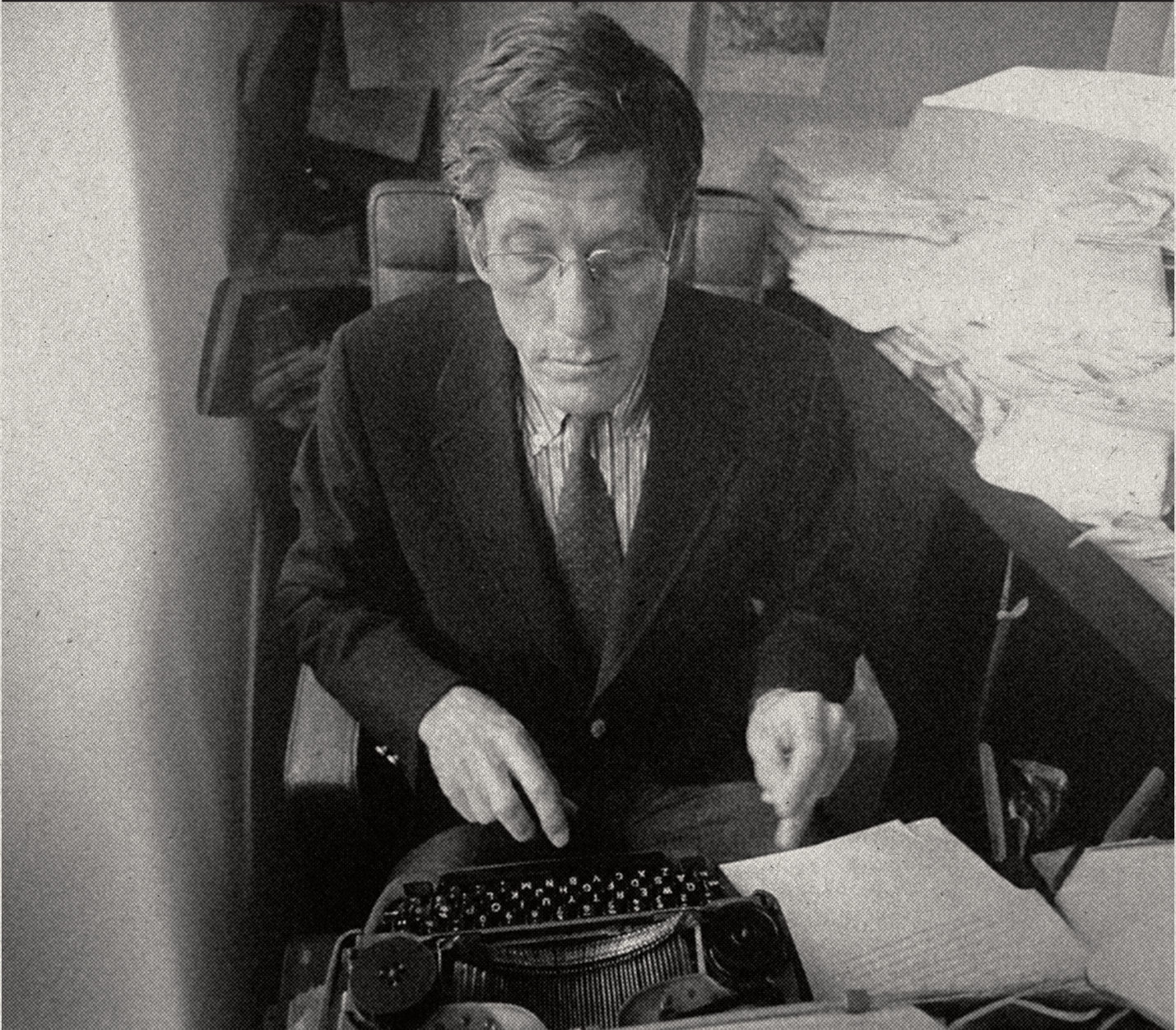
C. Ranlet Lincoln seated at a typewriter

A Scholar Treks in the Wasteland

University of Chicago

C. Ranlet Lincoln runs the Humanities Festival at the University of Chicago. He also runs the lowest-rated show on television. The episode features his passionate panel guests exploring narrativity, the lens through which we tell stories, and the imperfect lens through which Lincoln told his own, including his service in World War II. It ends with professors in a heated argument on the quad. Maybe Socrates and a young Obama join in.

The Greek Chorus

Characters

Grant and John navigate the narrative backbone of the articles. Their involvement is subtle: a father-and-son Greek chorus.

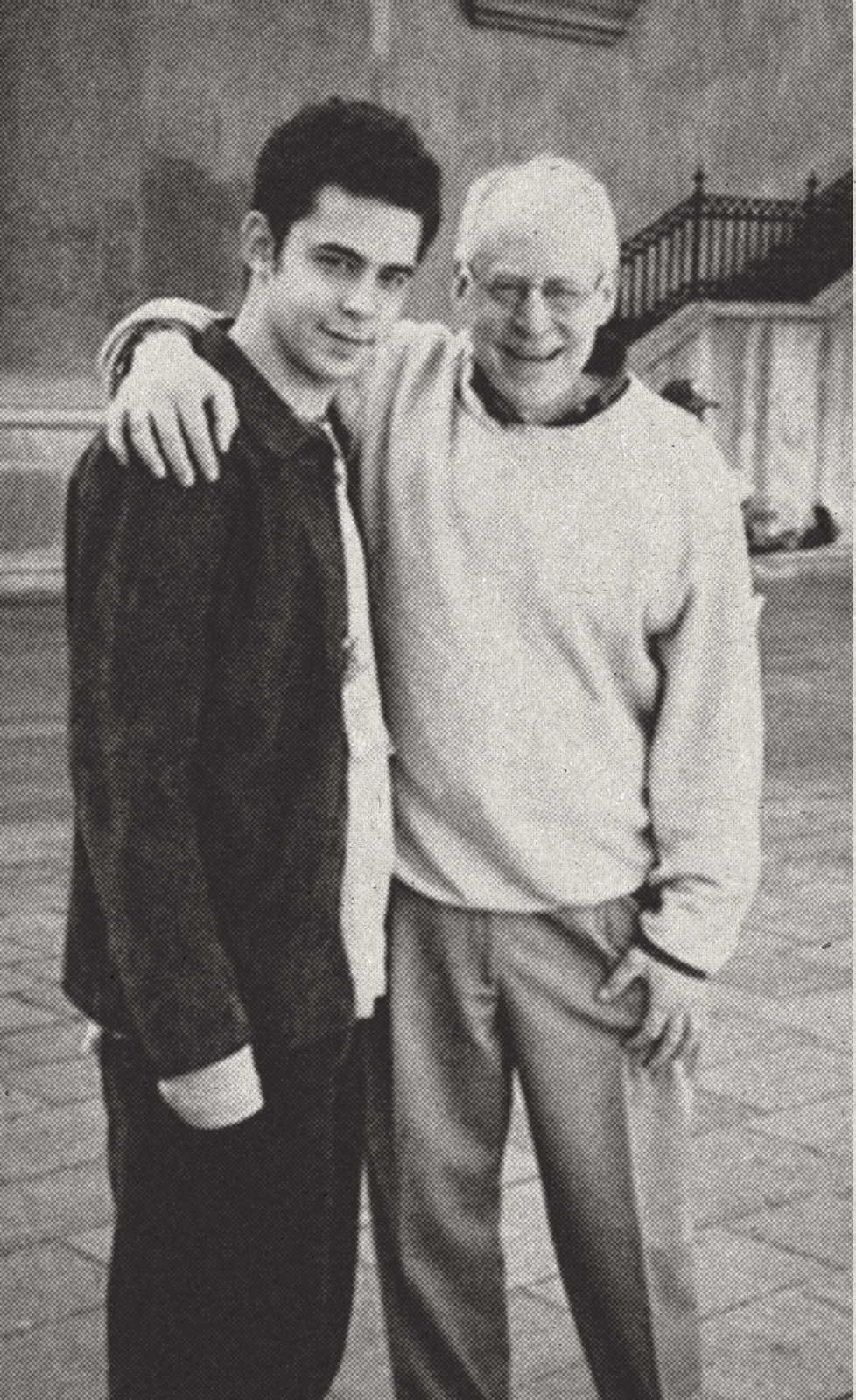
John Pick with his arm around his father Grant Pick
John and Grant.

Grant

A reporter, and the Lester Holt of our character profiles. Khakis, old man sweaters, Rockports; in winter, a big 1970s coat. Pens, notebooks, tape recorders. A warrior for democracy. His cigarette smoke may be the veil between this world and the next.

John

A present-day narrator connecting us to the why of each story, and a journey through grief, fathers and sons. He is our conduit to the present, examining what happened to the people in the news.

Ensemble

A tableau of characters who recur across episodes as the supporting players in the larger narratives: cops, judges, lawyers, waitresses, partygoers. A tableau reflecting a multicultural America. The people in the news.

Explored in Season One

Themes

  • Grifters and small-scale crime
  • The power of youth violence
  • Historical mobsters and the electric chair
  • Gay rights and debauchery
  • Starting a Black-owned bank
  • Ghosts, journalism and democracy

Show Influences

Comparables

  • Chef's TableEvery episode profiles a different character in their habitat.
  • Unsolved MysteriesJournalistic b-roll, straight-to-camera reporting and a mystical host.
  • This American LifeA vision of multicultural storytelling in America, but with actors.
  • The BearAn ensemble-based portrait of Chicago.

From the Morgue

More Stories

Thousands of articles. A treasure chest of future episodes.

Burned

A waitress at a Greek restaurant is horribly burned by flaming saganaki, and the renowned restaurant group can't take responsibility.

Speed Wash

A portrait of an African-American laundromat trying to stay afloat, with comedic suds.

David Axelrod

A Chicago Magazine profile of the man who would become the campaign strategist for Obama.

It's Insanity

A five-year blood feud over an apartment: the longest-running landlord-tenant case in Illinois history.

A Long Silence

A boy falls to his death in a grain silo. The friends who saw it tell no one, until they do.

Sir Edmund Hillary

The first man to summit Everest, and the complicated reality of a man having tea at the Drake Hotel.

Black and White and Feared All Over

A white man tries to keep a newsletter going in a Black neighborhood. How to portray violence is the issue.

Furby

A world-famous electronic toy is born, setting off a frenzy.

Bill Pinkney

A portrait of the first African American to sail solo around the globe.

A Plant Dies in Craigen

The last days of a printing press.

Uday's Hypnotist

A man is sent to Iraq to hypnotize Saddam Hussein's battle-weary son.

The Rag Man of Lincoln Park

A homeless man who once worked for the CIA sleeps in a church pew and on a park bench. His sister is looking for him.

Clemente High School Baseball

A Latino high school baseball team goes to the state championship.

Brother Bill

A priest walks into gunfire to shepherd young kids away from gang life.

Like a Rolling Stone

A homeless man called the Fly, and a pest to the police.

Bigot for Hire

A 1997 profile of neo-Nazi Art Jones, who years later would run for political office.

Morning Mouth

Shock jock Mancow Muller and his offensive radio ritual.

Bosom Buddies

Two elder cross-dressers and their ritual of shopping for and dressing in women's clothes.

Dinner Is Served

A woman trying to keep a ten-seat restaurant in business.

Bylines

About

Grant Pick · Reporter

Grant Pick wrote for the Chicago Tribune, the Chicago Sun-Times and People, and was a staff writer at the Chicago Reader, Chicago's version of the Village Voice. Over 30 years he carved out a niche for slice-of-life stories. His work is collected in The People Are the News: Grant Pick's Chicago Stories (Northwestern University Press), with a foreword by Alex Kotlowitz. He was a two-time winner of the Peter Lisagor Award for outstanding Chicago journalism.

John Pick · Creator

John Pick created and directed the short-form series and live show The Best of Craigslist (Funny or Die / truTV / The Public Theater), named Best Web Series by LA Weekly. He has written for the CBS Showcase, performed regularly on Conan, and won the David Mamet Prize for a short about his dog. He created the Snowball Party, performed around Los Angeles and for companies including Lululemon and BuzzFeed. He has taught storytelling in LAUSD and at the Ojai Playwrights Conference, his stories have aired on Chicago Public Radio, and he trained at Steppenwolf Theatre in Chicago.